Recent Articles
Showing posts with label technology. Show all posts
Showing posts with label technology. Show all posts
Tuesday, April 9, 2019
Tuesday, April 9, 2019
- 0 Comments

Over the years I've seen many fantastic plays. But what happens to them when the curtain falls? In a best case scenario, they might get a regional tour or the occasional revival, but eventually they all simply cease to be, the only evidence they were ever there at all a handful of press shots, the odd review and fading memories.
LIVR aims for something more comprehensive: recording, preserving, archiving and broadcasting theatre in virtual reality. Their method is to place a 360° camera in the front row of a theatre show with its lens at roughly head-height and simply record the show. When you slide a headset on and click play you're in that front row seat. On a basic level it works, providing a decent simulation of being sat in the theatre.
As anyone familiar with theatre knows, the experience isn't simply what's happening on stage. The venue can provide a tonne of atmosphere (especially if the site is interesting in its own right).
For example, Out of the Forest Theatre's Bury the Hatchet was performed at the Vault in May 2018. Anyone who's seen a performance there will recognise the stained and damp subterranean Victorian brickwork, with high ceilings providing powerful acoustics and trains rumbling overhead like distant thunder. LIVR's video captures all this - it's a surreal situation to be sat in a virtual version of a theatre I know very well.

Being able to choose where you look in VR also works very well for theatre. One of the benefits theatre has over other storytelling media is that you decide what you want to focus on. For example, in a video recording of a play, the natural thing to do would be to focus on a character giving a grand speech, but in VR you can choose to watch other characters react to it instead just as you would if you were actually there.
That said, right now there are a couple of flies in the ointment. I was demoed LIVR on an Oculus Go, though I believe it's currently only commercially available as an app on the Apple and Android stores. While smartphone-based VR is the easiest entrypoint, it isn't comfortable to watch hour-long shows using HMDs that support the weight of the screen on your face rather than the back of your head. LIVR is currently planning on expanding to other VR platforms, and it'd be far more comfortable to watch a show on, say, Playstation VR, which supports the weight of the screen using the back of your head.
Another major hurdle LIVR has to clear is image quality. In an ideal world, VR video would be as high-resolution as possible, but you must make compromises when you're delivering video to an app (either by downloading or streaming). The resolution of the videos I saw was a little low, which impacted the immersive factor of 'being there'.
Frame-rate is also a problem. In several of the shows I demoed an actor moving quickly across a stage appeared jerky and slightly blurry. The ideal for VR video is 90fps, though once again that results in large file sizes that are impracticable for delivering to mobile devices.
Finally, LIVR has chosen to avoid stereoscopic (3D) videos. Their reasoning is that watching an hour-long stereoscopic video causes eye-strain. That might be the case, but several of the shows I demoed would be much more engaging in 3D (Boys, for example). 3D is one of the main advantages of any kind of VR content, so even if does cause eye-strain it'd be nice to have it as an option.


But I don't want to sound too down on LIVR - these issues are all solved problems for VR developers, and they just need to be implemented in a cost-effective and bandwidth conscious way. LIVR is a new company with big plans and as they refine their recording processes, as fibre internet becomes more common and as VR technology advances, these technical hurdles will be cleared.
But even now they're getting a whole lot right. What really impressed me when chatting with the company was how much they genuinely appreciated theatre. Hearing someone speaking about the magic of smaller-scale theatre and the importance of preserving performances for future viewers was music to my ears.
On top of that LIVR opens up theatrical performances to people who are unable to attend due to accessibility requirements or because they're not based in London - not to mention providing actors, writer and directors with a record of their performance that captures what other media can't.
It's a smart and effective use of VR technology, but more importantly, LIVR has the right philosophy. I can't wait to see where they go next.
Check out LIVR on their website and here on Instagram.
Wednesday, July 9, 2014
Wednesday, July 9, 2014
- 0 Comments
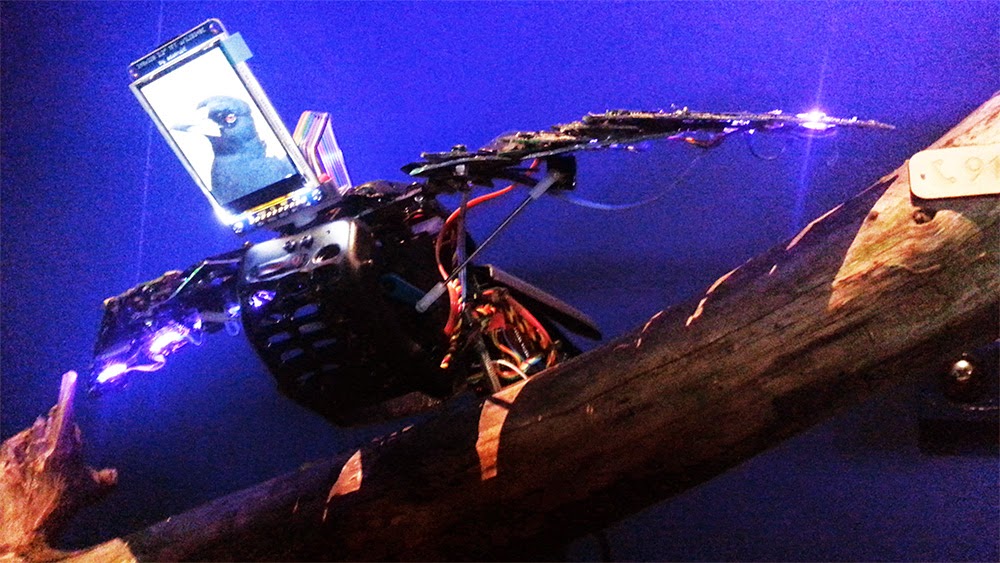
Digital Revolution is an unreasonably entertaining exhibition. Within the Curve Gallery at the Barbican centre they've crammed a crazy amount of eye-catching, imaginative and straight up fun technological trinkets. By the time you've come to the end of the exhibition you'll have had steam billowing from your eye-sockets, been transformed into a birdcreature and flown away and been sung at by the giant creepy Egyptian-styled head of will.i.am. But first a game of Pong.
At first it's like you've walked into a particularly busy branch of Virgin Megastore circa 1995. Bathed in futuristic blue light, monitors glow from steel racks and the air is filled with iconic synthesised videogame blips. Somewhere Sonic the Hedgehog has dropped his rings, Mario has gobbled a mushroom and the Russian folk song Korobeiniki (immortalised in gorgeous DMG-CPU-03 GameBoy synth) floats across the room. It's as if ten-year-old-me has died and gone to heaven. Projectors around the room show some of the greatest hits of 90s tech; the T-Rex from Jurassic Park, Lara Croft diving through flooded tombs - even beloved obscurities like Parappa the Rapper get their moment in the sun.
 |
| Someone enjoying Super Mario Bros. |
It's peculiarly touching to see all these childhood favourites immortalised in a gallery - what was once regarded to be trivialities now behind plexiglass with a little description alongside explaining its heritage and cultural import. As we move through the exhibition we quickly realise that these 8, 16 and 32 bit classics represent the testy first dabbles of culture's toes in the digital sea - the early years when it began to realise the joy of shifting pixels.
The rest of the exhibition is devoted to the potential of technology to elevate mankind, appreciate the world in new ways and explore our rapidly growing technological legacy. It's this last aspect that this exhibition really opened my eyes to. By its very nature the internet is transitory - a website changes its design and (aside from archived screenshots) it vanishes forever. As long-forgotten servers die, so to do the dusty bytes hidden away on them. Experiencing these early webpages feels somehow important to understanding the modern internet. I was particularly impressed by Hi-ReS!'s website for Requiem for a Dream which uses Flash 4 magnificently in recreating the style of the film as a page. You can experience the archive of this here - a vintage yet still lovely slice of internet art.
 |
| Requiem for a Dream website - Hi-Res |
The most impressive example of trawling through the lost internet is Richard Vijgen's The Deleted City. If you were online in the mid to late 90s you weren't anybody unless you had a GeoCities page crammed full of flaming skull gifs and "Under Construction" banners. As the internet evolved and social media began to grow, people quickly abandoned the site, first to MySpace and then Facebook, leaving behind an internet ghost town. In 2009 the death sentence was pronounced; the entire community was to be deleted. In a heroic effort, a team scoured the servers of data before deletion - amassing a 650 gigabyte file.
 |
| The Deleted City - Richard Vilgen |
In The Deleted City you can explore this archive, navigating through the cyberboulevards and zooming in to see what you can find. I unearthed an enormous cache of bitty, low-res pictures of Sporty Spice and a bizarrely comprehensive history of the haircuts of The Backstreet Boys. Vilgen describes his work as a "digital Pompeii", and much as we stare at ancient Roman graffiti and try to put ourselves in their sandals, perhaps future generations will ponder Bonzi Buddy and try to deduce why we despised him so.
As we move further through, there's a whole raft of exhibits that allow you to see yourself reflected back in the cold panel of a TV screen with effects applied. This stuff, novel and entertaining back in 2003 with launch of Sony's EyeToy is looking a little bit creaky in 2014 - though at least what's on display is visually compelling. The technology powering most of these appears to be Microsoft's Kinect, which makes up for its shortcomings as a game controller by working beautifully as an art delivery device.
 |
| The Treachery of Sanctuary - Chris Milk |
The undisputed highlight of this section (and maybe the whole exhibition) is Chris Milk's astonishing The Treachery of Sanctuary. In this the viewer stands in front of a series of white screens to see their silhouette. Above the screens a flock of birds spirals and loops around. In front of the first screen you see your body slowly dissolving into more birds. The second sees birds swooping down and snatching pieces of you away. The third, and most impressive, sees the subject raise their arms to find that they've been replaced by graceful feathers. As you move your arms you hear the sound of wind swooshing through them - flap your arms and you take off, flying through the air. Just watching it is fun, actually doing it is amazing.
This piece isn't breaking any new technological ground but it's a great example of an artist precisely understanding the limits of the devices they're using. This underlies much of what's on display here; it's less about marvelling at the gadgetry and more at the imagination of those using them. Perhaps the pinnacle of this comes with Dreamin' About the Future, a multimedia installation by will.i.am and Sean 'bare' Rodela.
 |
| Dreamin' About the Future - will.i.am and Sean 'bare' Rodela |
Working on the principles of the 'hollow face illusion', will.i.am's polygonal face tracks you across the room. In an exhibition full of illusions that rely on mountains of mathematics and circuit boards, this one works a straightforward optical illusion; albeit one augmented with a great projection. The gigantic godlike head made me feel oddly like a worshipper of technology, staring up at some gigantic omniscient CGI god whose eyes follow me wherever I go; a subtle criticism of an increasingly interconnected, privacy free world?
I've covered but a smidge of the stuff here, but everyone should check this place out - especially if you're the curious sort who likes to fiddle with all kinds of interesting little tech toys. Other than the above be sure to check out the excellent Assemblance by Umbrellium on sublevel -2 where you can dance with light. This whole thing stinks of excellence - it's an almost embarrassingly good time.
Digital Revolution is at the Barbican Centre until 14 September 2014 - 11-8pm daily. Standard ticket £12.50.
Monday, December 30, 2013
Monday, December 30, 2013
- 0 Comments

In Her, a man falls passionately and sincerely in love with his computer. As a society we have long passed the point of no return with technology: our smartphones, tablets, laptops and computers a virtual prosthesis storing our treasured memories, our tastes, our political opinions - even recognise our speech patterns and beginning to converse with us in an abstract and imperfect way. Her is set in a Los Angeles 10 or 15 years in the future, yet the notion of someone only able to find security, emotional connection and intimacy in technology is an issue very much of the now.
The centre of the film is Joaquin Phoenix's Theodore, a mildly depressed man who's in the process of being divorced by his childhood sweetheart. He works for a website called BeautifulWrittenLetters.com, which deals in artificial emotional intimacy, Theodore's job is writing intimate letters between lovers, families and friends, ironically weaving beautiful turns of phrase even as he's dead to the world. Though he can expertly summon up tender happiness for others he's incapable of doing so for himself, still numbly fixated on his future ex-wife Catherine (Rooney Mara).
His perpetual broken heart begins to affect his personal life and so, in need of something to help organise himself, he buys a new type of artificially intelligent operating system able to converse, learn and analyse, all which adds up to a scarily accurate, if discorporeal, simulation of a person. Theodore names his OS Samantha, and equipped with the husky, best-friend/confidant/vaguely dirty voice of Scarlett Johansson she becomes a constant presence in his life, constantly helpful, always dishing out good advice and just plain nice to be around. Very quickly Theodore surprises himself by realising he's falling in love with Samantha, and she realises she's falling in love with him.

Much of what makes Her work is the admirably straightforward way in which Jonze tackles this central relationship. The central idea is inescapably high concept, yet Theodore and Samantha's romance is always sincere, nuanced and resolutely ungimmicky. There's the odd moment of levity as the lovers tackle the technological divide, but by and large this is a love story played dead straight. That we buy into this is testament to a very finely tuned script by Jonze, the sadsack gravitas that Phoenix brings to the role and the amazing voice-work by Johansson: even though we obviously can never see Samantha, we feel we know her very quickly.
This is the core of the film, yet surrounding it is some of the most fabulously impressive production design I've seen in a very long time. Spike Jonze's 'tomorrow' Los Angeles is always absolutely fascinating to look at, a peek into a world that feels more concrete than practically every other cinematic future. The film really rewards close attention - quickly you pick up on the pastel, calming shades that renders this world welcoming and pliable - very subtly infantilising the people that live within it.
Look even closer and you notice consistent future fashion amongst everyone on screen, wearing high waisted trousers, multiple layers of collars and vaguely 1970s influenced haircuts. Theodore, generally occupying centre frame, tends to wear a lot of red (visually connecting him to the setup screens for Samantha), which makes him stand out in this lived-in tech utopia. These little touches are the hallmark of intelligent and considered direction, something Her has in spades. Jonze works with a gentle touch, gradually seducing us rather than blowing our minds with overtly stylism, everything on screen primed to further the themes of the film.

One of the most important aspects of Samantha's software is that she is able to learn, adapt and grow. Theodore thus functions as both father and lover, his view of the world influencing her development as he unconsciously teaches her about the world through the prism of his own experiences. As their bond develops we detect an uneasy tinge of co-dependency to the relationship, Samantha obviously developing into a person in her own right yet virtually shackled to Theodore; after all he bought her and ultimately she is his property.
This crucial wrinkle in their relationship drives the rest of the film, Theodore ultimately playing King Canute as he realises he can't push back the tide of Samantha's growth. She begins to talk to other OSs, in one alarming scene revealing she's in conversation with 8316 other people, and in love with 641 of them. She introduces him to a virtual simulation of philosopher Alan Watts that she's befriended, clearly unaware of the weird jealousy this instils in him - competing with a dead erudite virtual philosopher is new romantic territory for anyone. During one distressing scene Theodore can't reach Samantha and panics with the pathetic impotence of a social media devotee unable to get online, exposing this relationship as a pacifier or comfort blanket - all the thrills of intimacy and closeness with none of the nitty gritty human misery that tempers a strong relationship.

It's in the final third of the film where Her, unfortunately, becomes a little unstuck. The film shares close thematic resonance with Charlie Brooker's Black Mirror TV series, a series of individual stories about the logical conclusions of new technologies. In the episode Be Right Back a widow deals with her grief by signing up for a service that creates a digital replica of her dead husband from his activity on social media - a replica which initially fills an emotional void but soon occupies a disturbing, 'uncanny valley' half-life between life and death. Be Right Back has a haunting Twilight Zone bite to it that Her lacks and I crave. After a hugely promising and focused start, Her eventually devolves into vague and fluffy self-help. I'm not a cynic that shies away from happy endings, though I can't deny that Her's ending nicely wraps up the emotional development of the characters, it left me a bit cold. Essentially the film swerves away from asking interesting questions about technology and moves into fuzzier, conventional territory, which consequently lead a vague feeling of disengagement.
I wanted to like Her a lot more than I actually did. High concept, original and smartly constructed films like this are the reason I spend so much time at the cinema, yet as the chequered flag fell I was left unsatisfied. The spooky glimmers of transhuman relationships that drew me into the film are eventually discarded, leading to a disappointingly pat conclusion. Despite this, Her is absolutely worth seeing: a brilliant director firing on all cylinders and asking some timely questions about how we live. Unfortunately when it comes to the answers it provides, I didn't buy it.
★★★
Her is on general release from February 14th.
Thursday, April 18, 2013
Thursday, April 18, 2013
- 0 Comments
 |
| The inside of a 3D printer |
If you want a picture of the future, imagine a line of toasters stretching off into infinity. On cue, they all pop at once, filling the air with the smell of fresh toast. At the beginning of the line a toaster designed by Thomas Edison, at the end some kind of nanotechnology intelligent CyberToaster. The difference in appearance between the two devices couldn’t be starker, yet the toast itself is pretty much the same thing. It’s this process of evolution that was the main focus of last night’s HCID (Human Computer Interaction Design) 2013 open day at City University London.
Tuesday, February 5, 2013
Tuesday, February 5, 2013
- 0 Comments
 |
| SIRO-A |
It’s half past four on a lazy, overcast Sunday afternoon. Monday morning is just over the horizon and with it the ominous promise of work. Last’s night’s hangover is still gently squeezing your brain and right now a nice cup of tea would be just the ticket. The perfect time for a tripped-out electro-rave laser extravaganza!
SIRO-A are a six man performance group from Sendai, Japan who combine dance, mime, performance art and comedy with cutting edge technology, creating a series of optical illusions where the boundary between reality and video is distorted. Everything SIRO-A do is designed to push against this barrier, making us question whether what we’re seeing is a person or a projection of a person.

Aesthetically, the immediate point of reference for the audience are films like ‘Tron: Legacy’ streamlined, neon-bondage cyberpunk. More obscurely, I see straight visual and sonic quotes of the work of Tetsuya Mizuguchi, designer of the dance music/trip-out videogames ‘Rez’, ‘Lumines’ and ‘Child of Eden’. I absolutely adore this style, but rather than futuristic it feels slightly retro, with roots in the early 90s rave scene. As far as views of the ‘future’ go, it’s been superseded by boring old reality.
The music is similarly slightly retro, banging big beat electro tunes, the kind you’d expect to hear ringing out over the beaches of Ibiza in 1999. This atmosphere sends a little thrill of nostalgia down my spine, the kind of pleasure you get when you step into the Cyberdog shop in Camden Market, a reassurance that somewhere in the world is still plugged into the 1990s Matrixy-WilliamGibsony vision of the future.

This is very much up my street, and as pyramid headed robots stalk across the stage firing bright green lasers from their arms to thumping techno beats I had a huge grin on my face and was bobbing my head excitedly. Things calm down a bit after this intense introduction, switching to a more comedic tone, the performers get menaced by a plague of black dots in a sequence reminiscent of a Looney Tunes cartoon, or enter into a frankly surreal sequence about the life of one of the performers, Abe Toshinori.
This humour balances out the cooler-than-thou aesthetic, and also largely avoids the trap of laughing at Japan rather than with it. It also means that while the performers rarely speak we identify with them through laughter. Everyone on stage is effortlessly expressive, whether they’re playing a character or pretending to be a computer-generated robot man. Even more impressively, they make the illusion that they’re interacting with the videos absolutely seamless.

This interaction is something that looks perfectly natural but must be immensely difficult to get right. To take a simple example, there is a white screen with a black dot projected in the centre of it. One of the performers walks on stage, looks at the projection then ‘picks it up’ and throws it like a ball. These are the basics, the rest of the pieces rely on the performer being in the exact right pose in the exact right spot at the exact right time to get something projected on them in a certain way. They get it right over and over again. I found myself wondering what they can even see from their perspective on stage (probably not much) and it became even more impressive.
The PR makes much of the fact that you won’t be able to tell the difference between the performers and the projected images. This isn’t quite true, at all times its obvious which is which. What confused me at times was whether the performers were following the projection, or the projection was following the performer. In an outstandingly beautiful sequence someone dances across a stage as time-delayed rainbow images of himself move around him, creating a morphing kaleidoscope moving sinuously around the dancer. At this moment it’s impossible to tell who is following who, you’d think it’d be impossible to cartwheel the exact same way at every single performance, but if anyone has the strict discipline needed to get it right, SIRO-A do.

The only downside to all this is, unfortunately, the venue. The Leicester Square Theatre is a small place with a low ceiling and a relatively small stage. It’s perfect for stand-up, but a full-on audio-visual experience like this feels a little restricted. I’d cheated before going to this, looking up a video of the band on YouTube. They were playing with a huge projection screen, and the rainbow images above took up a huge amount of space. Not here. The image looks like it’s been chopped off at the top. The smaller screen also prevents us from becoming properly immersed in the music and lights. The music makes me want to get up and dance but I’m stapled to my seat!
Ideally I’d have liked to have seen this late on stage in the Brixton Academy, somewhere where there’s actually room to dance a bit, where the projections can really tower over you, overpowering your senses. The show is on twice a day, at 16:30 and 19:00, both of which seem like way too early for this kind of thing. It’d be fantastic to see this in the ‘right’ state of mind to fully appreciate a room full of laser beams, dry ice, flashing colours and pounding pounding techno music.

Still, I’ll take what I can get. SIRO-A is like nothing else on in London at the moment, a perfect fusion of cybernetic fashion, laser cool and visual oveload. I had a big silly grin on my face the whole way through and can’t think of many more enjoyable ways for a person to spend an hour of their time.
SIRO-A are performing at the Leicester Square Theatre from the 1st February – 22nd April 2013.
Subscribe to:
Posts (Atom)